
Kidney Stone Prevention and Smart Hydration Strategies
CONDITIONS

Written and Medically Reviewed by Mr Ivo Dukic, Consultant Urologist | Last updated: 25/05/2026
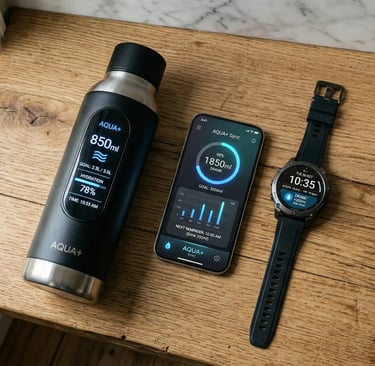
To prevent kidney stones, aim for a urine output of at least 2.5 litres per day, which usually means drinking 2.5 to 3 litres of fluid daily — more in hot weather or with exercise [1,2,3]. Water is best. Spread your intake evenly across the day, drink a glass before bed and after waking, and keep your urine a pale straw colour. High fluid intake roughly halves the risk of a recurrent kidney stone over five years [1]. Smart water bottles and reminder apps can modestly help you hit your target, although the latest large trial shows they do not reduce recurrence on top of standard counselling [4].
Why hydration is the single most powerful kidney stone prevention strategy
Almost every kidney stone — calcium oxalate, calcium phosphate, uric acid, cystine — forms when the urine becomes supersaturated with stone-forming salts. The simplest way to lower that supersaturation is to dilute the urine. More urine, less concentrated, less crystal formation, fewer stones.
The evidence for this is unusually strong. In a landmark five-year randomised controlled trial, patients with a first calcium stone who were counselled to keep their urine output above 2 litres per day had a stone recurrence rate of 12%, compared with 27% in the control group — a near-halving of risk and a significantly longer time to the next stone [1]. Subsequent meta-analyses and reviews have confirmed this dose-response relationship between urine volume and stone risk [3,5]. No medication for stone prevention beats this for cost, safety or effectiveness.
The catch is that knowing what to do and actually doing it every day are very different things. This is where smart hydration strategies come in.
How much water should you drink to prevent kidney stones?
The internationally accepted target, endorsed by the European Association of Urology, the American Urological Association and most stone-prevention guidelines, is a urine output of at least 2.5 litres per 24 hours [2]. For most adults, that means drinking 2.5–3 litres of fluid per day, because some of what you drink is lost in sweat, breath and stool.
Your real target should be set on a 24-hour urine collection, which is part of any proper metabolic work-up after a recurrent stone. If your urine volume is 1.4 L, you have a long way to go. If it is already 2.6 L, you don't need to drink yourself sick chasing 4 L — and indeed shouldn't, because excessive water intake can cause hyponatremia, particularly in older adults and patients on certain medications [6,7].
A practical sanity check: your urine should be pale straw-coloured, not deep yellow. Dark yellow urine, especially first thing in the morning, is a sign your nighttime hydration is inadequate — and overnight is when urine is most concentrated and stones are most likely to grow.
Smart hydration strategies that actually work
1. Spread fluid evenly across the day
A 24-hour urine of 2.5 L achieved by drinking three large glasses in the evening is not the same as 2.5 L spread across the day. Stone-forming salts crystallise whenever urine becomes concentrated, so you want to keep the urine dilute continuously. Aim for a glass of water every 1–2 waking hours.
2. Hydrate around the night
Overnight is the highest-risk window for stone growth because urine sits, concentrated, in the renal pelvis. Two simple habits help:
A glass of water before bed (small enough not to wreck your sleep)
A glass of water immediately on waking, before coffee and breakfast
This single change is one of the highest-yield tweaks I recommend in the clinic setting.
3. Match intake to losses
Hot weather, exercise, saunas, long-haul flights and physical jobs all increase fluid loss. Stone formers in hot climates or working outdoors should expect to drink 3–4 litres a day to keep urine output above 2.5 L [2,7]. A useful rule of thumb: weigh yourself before and after exercise, and replace each kilogram lost with a litre of fluid.
4. Choose the right fluids
Not all drinks are equal for stone prevention:
Water — the gold standard. Plain tap water in the UK is fine.
Citrus drinks (lemon water, fresh lemonade, orange juice) — provide citrate, which inhibits calcium stone formation. A wedge of lemon in your water is a simple, evidence-supported habit [7,8].
Coffee and tea (in moderation) — large epidemiological studies show coffee and tea are associated with a lower risk of stones, not higher, despite the old "tea has oxalate" myth [8].
Sugar-sweetened soft drinks, especially colas, are consistently associated with a higher risk of kidney stones and should be cut down or eliminated [8].
Grapefruit juice — associated with increased stone risk in cohort studies; avoid as your main fluid [8].
Alcohol — modest beer or wine intake is not strongly linked to stones in most data, but alcohol is dehydrating and shouldn't displace water.
5. Use a visible bottle and a measurable target
The single most effective behaviour change I see in clinic is when patients move from "I drink when I'm thirsty" to "I drink this 750 ml bottle three times before I leave work." Make the target visible, measurable and physical.
6. Mind the salt and the protein
Hydration does not work in isolation. High dietary sodium drives urinary calcium excretion and undermines the benefit of fluids; high animal protein intake raises uric acid and acid load. A stone-prevention diet pairs high fluid intake with lower sodium (ideally <6 g salt/day), moderate animal protein, and adequate dietary calcium from food (low-calcium diets paradoxically increase stone risk) [2,5].
Do smart water bottles and hydration apps work?
This is the question I now get asked in almost every clinic. The short answer: they help you drink more, but the evidence that they prevent stones beyond ordinary counselling is currently weak.
A feasibility trial of a connected smart bottle with context-aware reminder texts (the "Mini sipIT" intervention) showed a modest increase in 24-hour urine volume in stone formers over a month, but the study was small and not powered for recurrence [9]. The largest and most important trial to date — the PUSH (Prevention of Urinary Stones with Hydration) randomised clinical trial — gave every participant a Bluetooth smart bottle and tested whether a layered behavioural programme (financial incentives, coaching, reminders) on top of the bottle reduced symptomatic stone recurrence over two years. It found a modest increase in urine volume in the intervention arm but no significant reduction in stone recurrence, and a slightly higher rate of asymptomatic hyponatremia [4].
The interpretation I share with patients is pragmatic: a smart bottle is a useful tool — particularly if you struggle to remember to drink, work in an office, or want a visible daily total — but it is not a substitute for the underlying behaviour. The bottle does not prevent stones; consistently dilute urine does.
If you find a bottle, a reminder app or simple jug-on-the-desk approach helps you actually hit 2.5 litres of urine per day, use it. If you don't need the technology to hit the target, don't bother.
Special situations
Pregnancy. Hydration targets remain the same, but adjust for nausea, vomiting and increased fluid needs in later pregnancy. Discuss with your obstetrician and urologist.
Older adults and those with heart failure or renal failure. Aggressive fluid loading can cause hyponatremia or fluid overload. Targets should be individualised — speak to your clinician before pushing intake above 2 litres [6,7].
Cystinuria. Patients with cystine stones need substantially higher urine outputs — typically >3 litres per day, including overnight — and should be managed in a specialist clinic [2].
Uric acid stones. Hydration helps, but alkalinising the urine with potassium citrate (under medical supervision) is the cornerstone of prevention.
Children. Paediatric stone prevention is increasingly common; targets and approaches should be set by a paediatric urology or nephrology team.
Frequently asked questions
How much water should I drink a day to prevent kidney stones? Enough to produce at least 2.5 litres of urine per 24 hours — for most adults that is 2.5–3 litres of fluid intake daily, more in hot weather or with exercise [1,2].
Is drinking too much water bad for kidney stones? Excess water doesn't worsen stones, but it can cause low blood sodium (hyponatremia), particularly in older adults or those on diuretics or antidepressants. Aim for the target, not heroic over-drinking [4,6].
Does lemon water really help? Yes — citrate in citrus drinks inhibits calcium stone formation, and a glass of water with fresh lemon is a cheap, evidence-supported habit [7,8].
Are smart water bottles worth it? They modestly increase fluid intake but, on current evidence, do not reduce stone recurrence beyond standard counselling [4,9]. Worth it if they help you hit your target; not essential if a regular bottle does the job.
Can coffee cause kidney stones? No. In large cohort studies, both caffeinated and decaffeinated coffee are associated with a slightly lower risk of stones [8]. The main culprits are sugar-sweetened soft drinks.
Does the colour of my urine matter? Yes — pale straw is the simplest real-time hydration check. Dark yellow first thing in the morning is a sign your overnight hydration is inadequate.
The bottom line
Hydration is the most powerful, cheapest and best-evidenced strategy to prevent kidney stones. Aim for 2.5 litres of urine output per day, achieved with 2.5–3 litres of mostly water, spread evenly, with a glass before bed and on waking, and a wedge of lemon where you like it. Combine this with lower salt, sensible protein, normal dietary calcium and a 24-hour urine collection to fine-tune your personal target. Use a smart bottle or reminder app if it helps you hit the number — but remember the bottle is the tool, not the cure.
If you are a recurrent stone former, please ask your GP for a referral to a urologist for a full metabolic assessment. The best stone is the one you never form.
About the author
Mr Ivo Dukic is an experienced consultant urologist and high-volume stone surgeon in Birmingham, United Kingdom. You can schedule an appointment with him for expert, bespoke advice through his Top Doctors profile or book an appointment through Harborne Hospital, HCA Healthcare, the Priory Hospital, Edgbaston, Circle Health Group or Droitwich Spa, Circle Health or Spire Parkway, Solihull.
References
Borghi L, Meschi T, Amato F, Briganti A, Novarini A, Giannini A. Urinary volume, water and recurrences in idiopathic calcium nephrolithiasis: a 5-year randomized prospective study. J Urol. 1996;155(3):839–43.
Skolarikos A, Neisius A, Petřík A, Somani B, Thomas K, Gambaro G, et al. EAU Guidelines on Urolithiasis. Arnhem (NL): European Association of Urology; 2024. Available from: https://uroweb.org/guidelines/urolithiasis.
Hakam N, Abou Heidar N, Khabsa J, Hneiny L, Akl EA, El-Hajj A. Outcomes in randomized clinical trials testing changes in daily water intake: a systematic review. JAMA Netw Open. 2024;7(11):e2447621. doi:10.1001/jamanetworkopen.2024.47621.
Desai AC, Maalouf NM, Harper JD, Sivalingam S, Lieske JC, Lai HH, et al. Prevention of urinary stones with hydration: a randomised clinical trial of an adherence intervention. Lancet. 2026. doi:10.1016/S0140-6736(25)02637-6.
Koudonas A, Anastasiadis A, Tsiakaras S, Langas G, Savvides E, Mykoniatis I, et al. Lifestyle factors and the microbiome in urolithiasis: a narrative review. Nutrients. 2025;17(3):465. doi:10.3390/nu17030465.
Devuyst O, Ahn C, Barten TR, Brosnahan G, Cadnapaphornchai MA, Chapman AB, et al. KDIGO 2025 Clinical Practice Guideline for the Evaluation, Management, and Treatment of Autosomal Dominant Polycystic Kidney Disease (ADPKD). Kidney Int. 2025. doi:10.1016/j.kint.2024.07.009.
Courbebaisse M, Travers S, Bouderlique E, Michon-Colin A, Daudon M, De Mul A, et al. Hydration for adult patients with nephrolithiasis: specificities and current recommendations. Nutrients. 2023;15(23):4885. doi:10.3390/nu15234885.
Ferraro PM, Taylor EN, Gambaro G, Curhan GC. Soda and other beverages and the risk of kidney stones. Clin J Am Soc Nephrol. 2013;8(8):1389–95. doi:10.2215/CJN.11661112.
Streeper NM, Fairbourn JD, Marks J, Thomaz E, Ram N, Conroy DE. Feasibility of Mini sipIT behavioral intervention to increase urine volume in patients with kidney stones. Urology. 2023;180:25–31. doi:10.1016/j.urology.2023.06.019.
Travers S, Courbebaisse M, Daudon M, Houillier P. How to monitor hydration status and urine dilution in patients with nephrolithiasis. Nutrients. 2023;15(7):1642. doi:10.3390/nu15071642.
This article is for information only and does not replace individual medical advice. If you have a history of stones, recurrent symptoms, heart failure or kidney impairment, please discuss your hydration target with your doctor before making major changes.
Have any questions?


If you have any questions or wish to make an appointment please get in contact.
Ivo Dukic
Contacts
e-mail: admin@ivodukic.co.uk
Telephone number for private patients:
0121 716 9046
(Mondays to Fridays 0800 - 18:00)
For NHS patients seen at University Hospitals Birmingham NHS Hospitals please get in contact on
0121 424 9011
(Mondays to Fridays 0900 - 17:00)
ivodukic.co.uk
© 2026 UrolSurg LTD · Privacy policy


GMC 6103172
BSc MBChB PG Cert FRCSEd (Urol)