
Coloplast Thulium PCNL Access Masterclass Course
Mr Ivo Dukic on the Coloplast PCNL Access Masterclass at Heartlands Hospital — supine PCNL, TFL Drive laser and suction sheath stone surgery.
Ivo Dukic
5/15/20263 min read
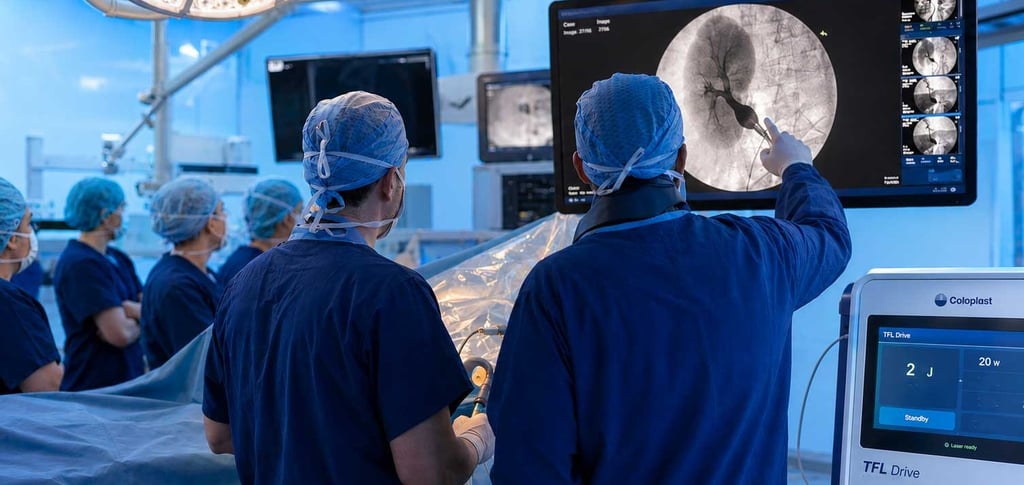
TFL Drive Laser in PCNL: Inside the Coloplast PCNL Access Masterclass Course
By Mr Ivo Dukic, Consultant Urological Surgeon, Birmingham, Updated 15/05/2026
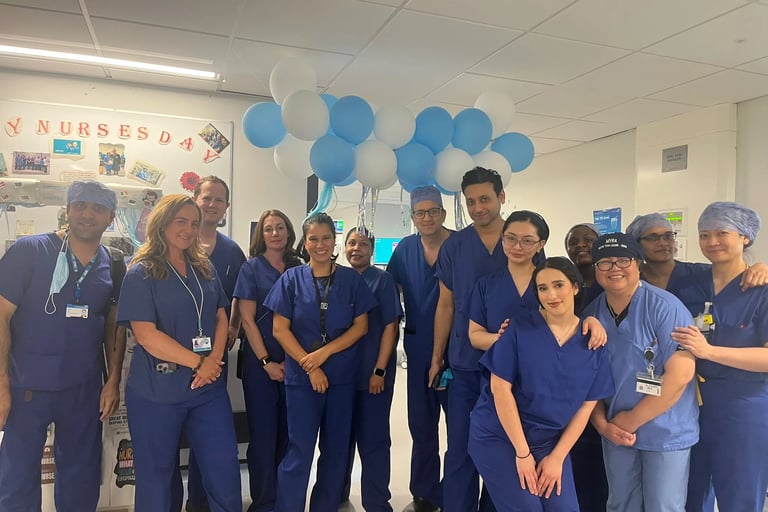
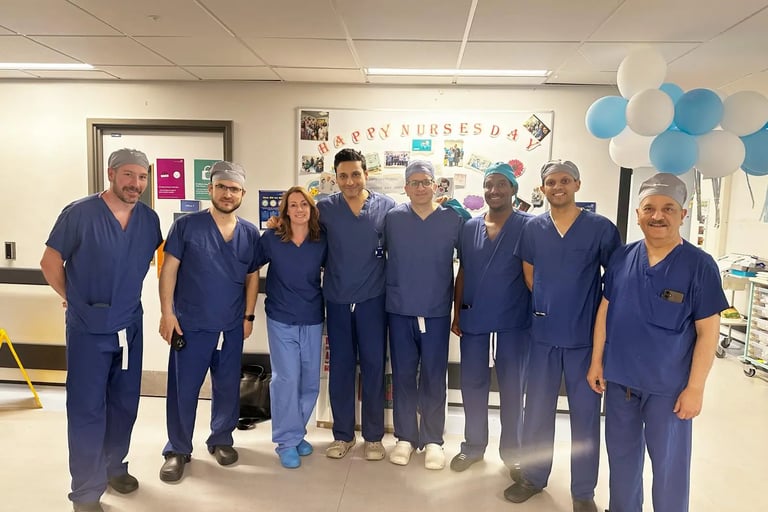
I recently had the pleasure of organising and being part of the faculty of the Coloplast PCNL Access Masterclass at Heartlands Hospital, University Hospitals Birmingham NHS Foundation Trust. Two days of surgery with six live percutaneous nephrolithotomies (PCNLs), and a deliberately challenging case mix designed to put the latest technique under real intraoperative pressure. Alongside my co-organiser and faculty, Mr Maitrey Darrad, the focus was on supine PCNL access and the integration of two technologies that, in my practice, are reshaping complex renal stone surgery: the Coloplast TFL Drive laser and suction sheath irrigation.
This article unpacks why these technologies matter for patients with kidney stones.
Why Supine PCNL Access?
PCNL is the gold-standard treatment for large or complex renal stones. The procedure begins with percutaneous access through the flank into the targeted calyx (pocket) of the kidney — the single most important step in the entire operation. Get access wrong, and no laser or device will salvage the case.
Supine PCNL — operating with the patient lying on their back rather than prone — is the position I have used as default since 2017. It allows simultaneous retrograde access for endoscopic combined intrarenal surgery (ECIRS), improves anaesthetic safety in obese or cardiorespiratory-compromised patients, and reduces operative time. The masterclass focused entirely on supine PCNL access and surgery, with cases requiring fluoroscopic, ultrasound and flexible-scope-guided puncture, infundibulotomy, and live problem-solving across horseshoe kidneys, impacted stones and distorted collecting systems.
The Coloplast TFL Drive Laser
Lithotripsy across the two days was delivered using the Coloplast TFL Drive — a thulium fibre laser operating at 1940 nm.
The thulium fibre platform is a step-change from the holmium:YAG technology that has dominated stone surgery for the past two decades. In vitro comparisons against holmium have shown higher stone ablation volume, finer dust quality, and lower energy consumption.
Intraoperatively, that translates into more efficient lithotripsy, very low retropulsion — the stone does not jump away from the laser fibre — and a stone-agnostic profile. Calcium oxalate monohydrate, the hardest commonly encountered stone composition, fragments as predictably as softer stones. Preset power limits keyed to anatomical site add a sensible safety margin, and the interface is intuitive enough to navigate mid-case without losing focus on the operative field. As a single platform spanning lithotripsy, prostate enucleation and soft-tissue work, the TFL Drive functions as a genuine workhorse laser.
Suction Sheath Technology
If the laser breaks the stone, the sheath is what gets the fragments out. We use suction sheaths as standard for our PCNL procedures, and the rationale is straightforward.
Conventional access sheaths rely on irrigation flow and gravity to clear stone dust and small fragments. The problem is that this approach raises intrarenal pressure (IRP), which is associated with two clinically important risks. The first is postoperative sepsis — high IRP forces bacteria and bacterial endotoxins from the collecting system into the venous circulation, and sepsis remains the most serious complication after PCNL. The second is renal trauma from pyelovenous and pyelolymphatic backflow under pressure.
A suction sheath actively aspirates irrigation fluid and fragments through a sealed channel, keeping intrarenal pressure low throughout the case. Practically, this means fragments are removed continuously rather than retrieved in batches, the operative field stays clear, operating time falls, the infection risk profile of the procedure improves, and stone-free rates at follow-up imaging are higher.
Combined with the fine dust produced by the TFL Drive, suction sheath mini PCNL is moving the procedure towards a true "dust-and-aspirate" model — closer to how we already operate flexibly for upper tract stones, but with the throughput advantages of percutaneous access.
Why Training Like This Matters for Patients
Live operative courses are how techniques and technologies actually disseminate into clinical practice. The delegates who attended will take what they observed back to their own units across the UK, refining their access technique and considering how to integrate TFL Drive and suction sheath mini PCNL into their own pathways.
For Birmingham patients facing PCNL surgery, what these two days demonstrated is what a modern stone service should look like: supine positioning, a thulium-fibre laser for predictable lithotripsy, and active intrarenal pressure control throughout the case with suction sheaths. The combination gives the best chance of a stone-free result in a single setting, with a low complication profile.
If you have been diagnosed with kidney stones and would like to discuss your treatment options, you can book an initial consultation through my secretary on 0121 716 9046 or via the contact form.
Ivo Dukic
Contacts
e-mail: admin@ivodukic.co.uk
Telephone number for private patients:
0121 716 9046
(Mondays to Fridays 0800 - 18:00)
For NHS patients seen at University Hospitals Birmingham NHS Hospitals please get in contact on
0121 424 9011
(Mondays to Fridays 0900 - 17:00)
ivodukic.co.uk
© 2026 UrolSurg LTD · Privacy policy
GMC 6103172
BSc MBChB PG Cert FRCSEd (Urol)