
Skip the NHS Wait: Private Kidney Stone Surgery Options
Stuck on an NHS waiting list with a painful kidney stone or stent? Discover the costs, benefits, and fast-track options for self-pay private surgery.
Ivo Dukic
3/9/20266 min read
Written and Medically Reviewed by Mr Ivo Dukic, Consultant Urologist | Last updated: 14/03/2026
If you have ever experienced a kidney stone, you know that the pain is often described as one of the most excruciating things a person can endure—frequently compared to, or even said to exceed, childbirth. When a stone strikes, it turns your life upside down.
While the NHS provides excellent emergency care to get you through the initial crisis, non-emergency kidney stone surgeries can face significant delays. This leaves many patients in a painful, anxious limbo, waiting months for an operation to definitively clear the stone.
For those without private health insurance, "self-pay" private healthcare is an increasingly common alternative. But is paying out-of-pocket the right financial and medical decision for you? This guide breaks down the costs, the clinical realities of waiting, and the benefits of private treatment to help you decide.
1. The Hidden "Costs" of Waiting: The Reality of the Ureteric Stent
Often, when you present to A&E in excruciating pain, the immediate solution is to insert a temporary plastic tube called an indwelling ureteric stent to drain the kidney, bypass the blockage, and relieve the immediate crisis. You are then placed on a waiting list for the actual surgery to remove the stone.
While stents are lifesavers in an emergency, living with one for months on a waiting list comes with a severe, heavily documented physical and financial toll.
The Burden on Your Daily Life
Living with a stent is rarely a "fix and forget" situation. Extensive urological studies using the validated Ureteral Stent Symptoms Questionnaire (USSQ) reveal just how disruptive these temporary tubes are [1][2]:
Reduced Quality of Life: Up to 80% of patients experience a significant drop in their daily quality of life due to the stent. [1][3]
Constant Pain: More than 80% of patients report stent-related pain (often in the flank or pelvis) that actively interferes with their daily activities. [1]
Urinary Symptoms: Between 78% and 90% of stented patients suffer from lower urinary tract symptoms (LUTS). This includes a constant, bothersome urge to pee, frequency, and pain when voiding. (For comparison, these symptoms occur in only 13% of patients without a stent). [1][4]
Intimacy Issues: Approximately 32% of patients report that the stent causes sexual dysfunction or discomfort. [1]
The Economic Impact (Lost Earnings & Work)
The cost of private surgery must be weighed against the cost of lost income. Research shows that 58% of patients report reduced work capacity and a negative economic impact directly caused by their stent. The combination of chronic pain, urinary urgency, and general fatigue leads to significant time off work (absenteeism) or severe drops in productivity (presenteeism). [1]
Medical Risks of Long Waiting Times
Stents are designed to be temporary. The longer a stent stays inside your body while you wait for surgery, the higher the risk of serious complications, including:
Haematuria (Affects 39% - 78% of patients): Noticeable blood in your urine, which can be highly distressing. [1][5]
Urinary Tract Infections (Common): An increased risk of bacterial infections requiring antibiotics. [6]
Stent Migration (Occurs in 19% - 27% of long-term cases): The stent moves out of its ideal position, requiring medical intervention. [7][8]
Having an indwelling ureteric stent is a recognised risk factor for developing urosepsis following stone surgery. Current expert guidance therefore emphasises minimising stent dwell time as one of the most important strategies to reduce the risk of this dangerous complication. In simple terms: the sooner the stent comes out, the lower your risk of a serious, potentially life-threatening infection.
The Danger of "Encrustation"
Perhaps the most significant long-term risk of waiting for surgery is encrustation. Because urine contains minerals, a stone-like crust can begin to form over the plastic stent. If a stent becomes heavily encrusted, it can block the kidney, cause severe infection, or become incredibly difficult to remove.
The risk of encrustation skyrockets the longer you wait [8]:
Under 6 weeks: 9.2% risk
6 to 12 weeks: 47.5% risk
Over 12 weeks (3 months): 76.3% risk
By opting for self-pay private surgery, you are not just skipping a queue; you are drastically reducing the time a stent remains in your body, thereby bypassing these soaring complication rates.
2. What Are the Treatment Options?
When you pay for private surgery, you are paying for a definitive solution to remove the stone. The recommended procedure will depend on the size, location, and hardness of your stone.
Extracorporeal Shock Wave Lithotripsy (ESWL): A non-invasive treatment that uses targeted sound waves from outside the body to break the stone into tiny pieces that can be passed naturally.
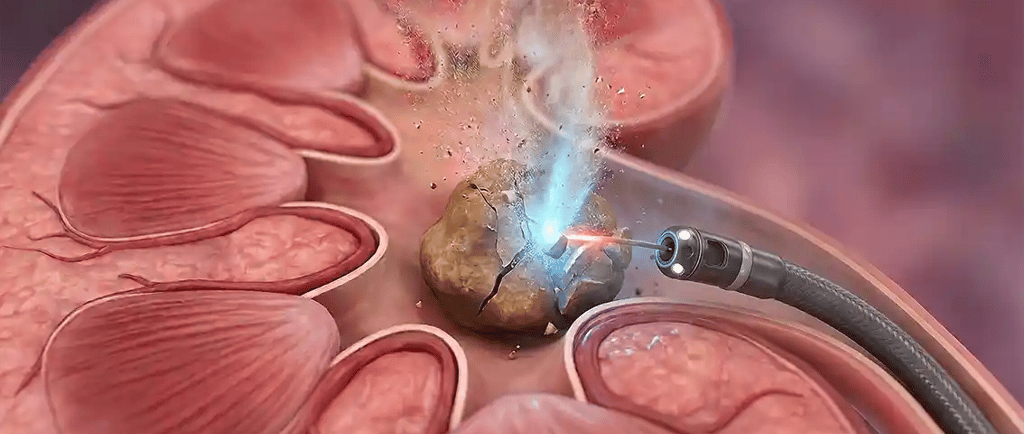
Ureteroscopy and Laser Fragmentation (URS): A highly effective, minimally invasive procedure where a tiny camera is passed through the urethra and bladder up to the stone. A laser is then used to dust or break the stone into pieces which are removed with a microscopic basket.
Percutaneous Nephrolithotomy (PCNL): Reserved for much larger or complex stones, this involves creating a small incision in the back to access the kidney directly and remove the stone.
A Note on Stent Avoidance: It is worth noting that if you opt for swift, private day case ureteroscopy to clear an uncomplicated stone, a stent might be avoided entirely. The latest American Urological Association (AUA) guidelines state that surgeons may safely omit post-operative stents in uncomplicated cases, sparing you from the associated pain and urinary symptoms entirely. [6]
Mr. Dukic will discuss whether this is a safe, viable option for your specific case during your consultation.
3. Breaking Down the Private Costs (What are you paying for?)
Transparency is key when self-funding healthcare. Private hospitals in the UK typically offer "fixed-price packages" so you know exactly what you will pay before you commit.
What a Package Typically Includes:
Initial consultation and diagnostic imaging (such as a CT KUB scan).
The Consultant Surgeon's fee.
The Consultant Anaesthetist's fee.
Hospital fees (theatre time, medical equipment, and your day-case bed or overnight stay).
Follow-up appointments and post-operative scans to ensure the stone is fully cleared.
Ballpark Figures: While costs vary depending on the hospital facility and the exact complexity of your stone, a standard Ureteroscopy and laser fragmentation in the UK generally ranges between £5,000 and £7,000. (Please note: For an exact, up-to-date quote tailored to your specific needs, you will need an initial consultation to determine your stone burden and treatment options).
4. The Value: Is It Worth the Investment?
When looking at a quote for self-pay surgery, it is a significant financial commitment. However, many patients find that taking control of their treatment is an investment that pays for itself in peace of mind.
Immediate Relief from Pain and Anxiety: You are effectively paying to fast-track your return to a normal, pain-free life. Private surgery can often be scheduled within a matter of weeks, or even days, getting that stent out and stopping the colic attacks.
Choice of Consultant: You guarantee that an experienced, high volume, specialist Consultant Urological Surgeon, like Mr. Ivo Dukic, personally oversees your entire journey, from diagnosing the scan to performing the surgery and managing your recovery.
Total Control Over Your Schedule: Waiting lists strip you of your ability to plan. Private treatment is scheduled around your diary, allowing you more flexibility to arrange childcare, coordinate time off work, and recover on your own terms.
A Premium Environment: Whether you are a day-case or staying overnight, you can expect a private en-suite room, dedicated nursing care, and a highly streamlined, calm experience.
5. How Do Patients Fund Self-Pay Surgery?
Patients typically fund their procedures in a few different ways:
Savings: The most straightforward route for those who have a "rainy day" fund.
Medical Payment Plans: Many private hospitals partner with medical finance companies to offer 0% or low-interest finance plans. This allows you to get the surgery immediately but spread the cost over 10 to 36 manageable monthly payments.
Employer or Family Support: In many cases, family members will chip in, or employers will help cover the costs to help a key staff member get healthy and back to work without prolonged absences.
6. Next Steps: Exploring Your Private Treatment Options
Weighing the financial cost of private surgery against the physical pain, the disruption to your career, and the misery of living with a stent is a deeply personal decision. However, you do not have to make it in the dark.
The best way to understand your options is to have your specific case reviewed by an kindey stone expert.
Ready to take control of your health? Book an initial, no-obligation consultation with Mr. Ivo Dukic today. During this appointment, he will assess your scans, discuss the best surgical approach for your specific stone, and provide a transparent, customised quote so you can make an informed decision.
REFERENCES
1. Joshi HB, Newns N, Stainthorpe A, MacDonagh RP, Keeley FX Jr, Timoney AG. Ureteral stent symptom questionnaire: development and validation of a multidimensional quality of life measure. J Urol. 2003;169(3):1060-4.
2. Joshi HB, Okeke A, Newns N, Keeley FX Jr, Timoney AG. Characterization of urinary symptoms in patients with ureteral stents. J Endourol. 2003;17(1):59-62.
3. Tanneru K, Tanneru S, Bhatt NR, Davis NF, Bolton DM, Lawrentschuk N. Ureteric stenting after uncomplicated ureteroscopy: a systematic review. BJU Int. 2025;135(4):405-15.
4. Assimos D, Krambeck A, Miller NL, Monga M, Murad MH, Nelson CP, et al. Surgical management of stones: American Urological Association/Endourological Society guideline. J Urol. 2016;196(4):1153-60. Amended 2025.
5. El-Nahas AR, Ibrahim HM, Sheir KZ, Mohsen T, El-Kappany HA, El-Assmy AM. Comparison of ureteral stent types regarding complications and stent-related symptoms. Urol Int. 2008;81(3):276-80.
6. Ather MH, Faizullah K, Achakzai I, Soomro R, Javed F. Forgotten ureteral stents: an avoidable morbidity. J Coll Physicians Surg Pak. 2016;26(3):208-12.
7. El Faqih SR, Shamsuddin AB, Chakrabarti A, Atassi R, Kardar AH, Osman MK, et al. Polyurethane internal ureteral stents in treatment of stone patients: morbidity related to indwelling times. J Urol. 1991;146(6):1487-91.
8. Singh I, Junaid M, Singh AK, Jaidka A. Encrustation and biofilm formation on indwelling double-J ureteral stent and their management. Indian J Surg. 2020;82(6):1134-41.
Ivo Dukic
Contacts
e-mail: admin@ivodukic.co.uk
Telephone number for private patients:
0121 716 9046
(Mondays to Fridays 0800 - 18:00)
For NHS patients seen at University Hospitals Birmingham NHS Hospitals please get in contact on
0121 424 9011
(Mondays to Fridays 0900 - 17:00)
ivodukic.co.uk
© 2026 UrolSurg LTD


GMC 6103172
BSc MBChB PG Cert FRCSEd (Urol)